Charge points the supply can actually carry.
Workplace, fleet and car park charging — sized against the building's real supply, load-managed, installed to BS 7671 and handed over with the certificates and the DNO paperwork done.
Most charging projects stall at the supply.
Bolting a charger to a wall is the easy part. The question that decides the cost is whether the incoming supply can take ten of them at six o'clock on a weekday — and that is a question about the building, not the charger.
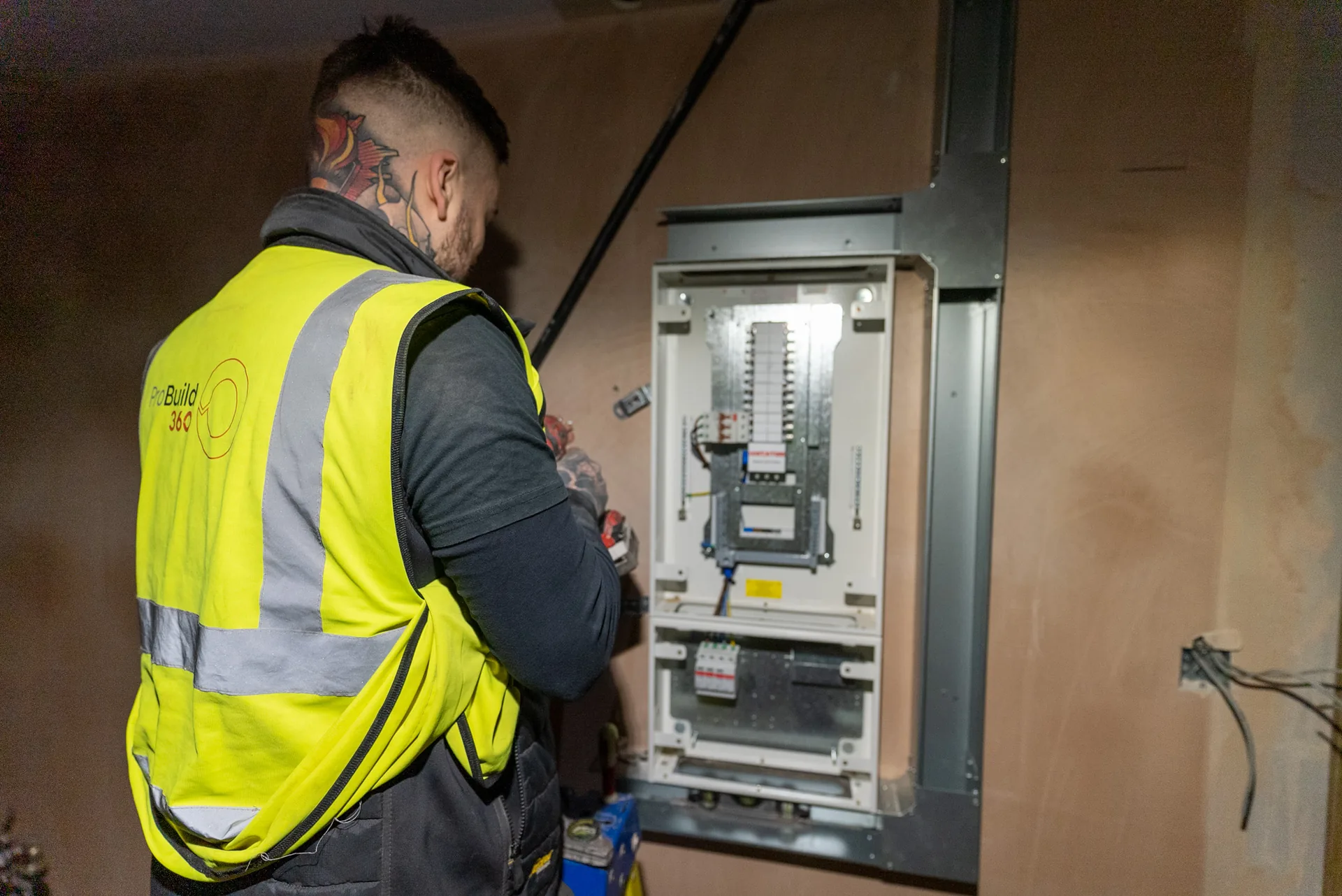
So we start at the board: what the site draws now, what headroom there is, and whether load management lets the chargers share it instead of paying for an upgrade nobody needed.
The cheapest charge point is one the supply never notices.
What we design and install.
- Workplace and car park charge points, wall-mounted and pedestal
- Fleet and depot charging
- Load management across multiple chargers
- Supply assessment and upgrade coordination
- Groundworks, ducting and cabling to remote bays
- Smart charge points that meet the Electric Vehicles (Smart Charge Points) Regulations
- DNO notification and any application the connection needs
- Testing and certification to BS 7671, including Section 722
- [OZEV authorised installer status to be confirmed]
- [Preferred charger manufacturers to be confirmed]
Bracketed items are awaiting confirmation from Systems360 and have deliberately not been invented. Authorisation in particular decides whether a client can claim a grant, and is not something to claim on their behalf.
The same charger, a different site each time.
What changes from one job to the next is not the unit on the wall. It is the supply behind it and how the bays get used.
At a workplace
Cars arrive in the morning and sit all day, so the chargers rarely need to run flat out at once. Load management spreads a modest supply across many bays and keeps the building's own demand first.
- Existing supply and headroom measured before anything is specified
- Load management set so the building always comes first
- Bays laid out for the cars that will actually use them
- Certificates and DNO paperwork issued at handover

[Second commercial application to be supplied]
[A second kind of commercial charging job Systems360 delivers — a fleet depot, a development, a public car park — what that client needed and what made it different from the row above. To be written by Systems360 rather than invented here.]
How a charging project actually runs.
Three stages, whether it is two bays or forty. What changes is the depth, not the order.
Survey and supply
We measure what the site draws, check the headroom, and work out how many chargers it can carry with and without load management before anything is ordered.
Install
Cabling, ducting and any groundworks, then the chargers themselves, sequenced around the site so bays come out of use for as short a time as possible.
Commission and hand over
Chargers tested, load management set up and proved, the DNO notified, and the certificates and user information handed over.
Questions we get before we start.
Will we need a bigger supply?
Often not. Load management lets several chargers share the headroom the site already has, and we will tell you what that gives you before you pay for an upgrade.
Are there grants for workplace charging?
Government schemes come and go and their rules change. [Grant support and OZEV authorisation to be confirmed with Systems360.] We will check what currently applies to your site before quoting.
Does the network operator need to know?
Yes. Charge points have to be notified to the distribution network operator, and larger installations need its agreement first. We handle that as part of the job.
Can you work while the car park is in use?
Yes. We agree which bays come out of use and when, and keep the rest of the site running around us.
Who looks after the chargers afterwards?
[Maintenance and support arrangements to be confirmed with Systems360.] We would rather agree that at the start than leave it to the first fault.

[Replace with a real review from a commercial client — ideally one that names the charging work specifically.]
Charging at home instead?
This page is written for specifiers, fleet managers and commercial clients. There is a separate one for homeowners, covering a charger on the drive — where it goes, what the supply can take, and what it costs to run.